
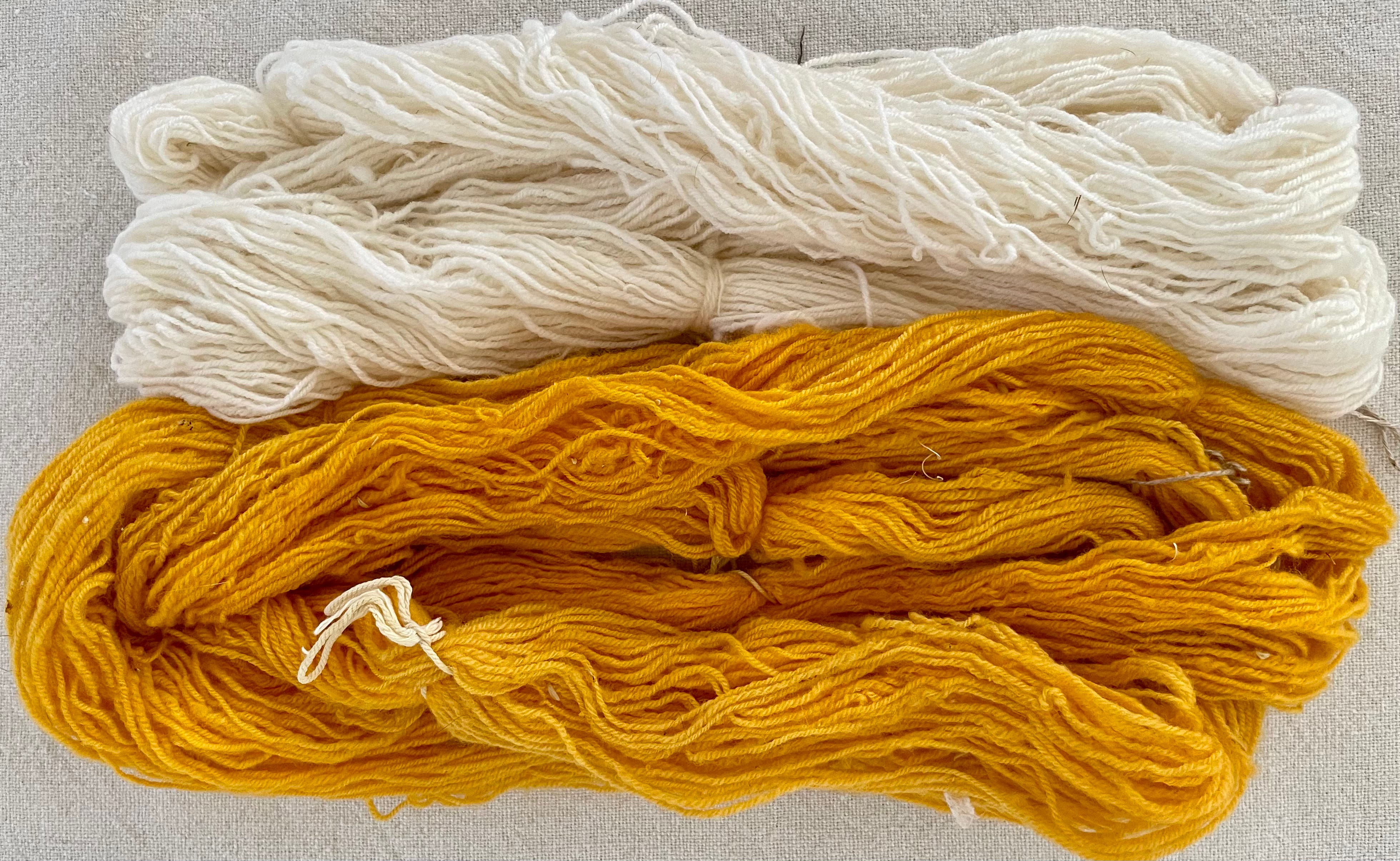
this yellow

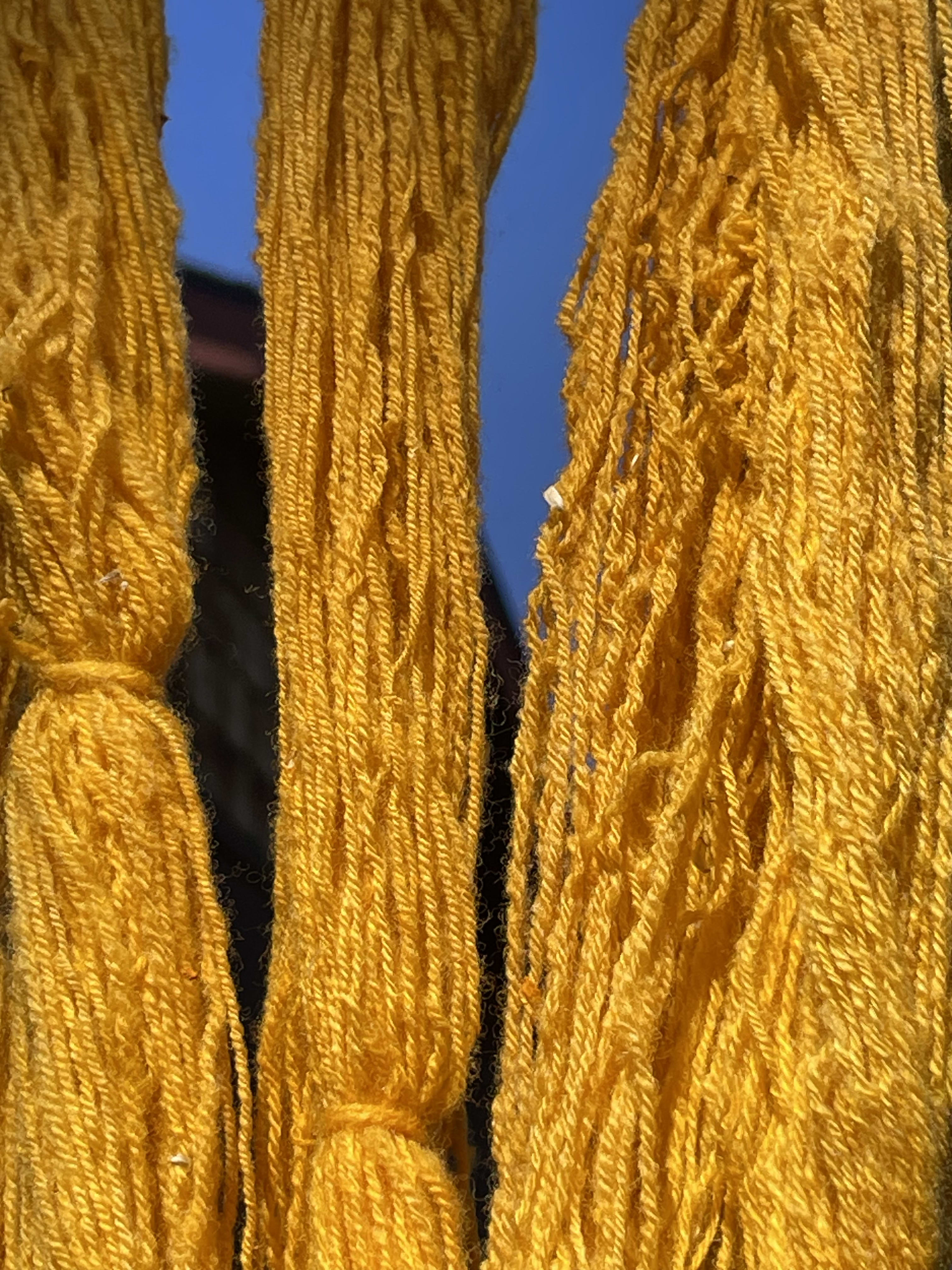
I wasn’t expecting this yellow.
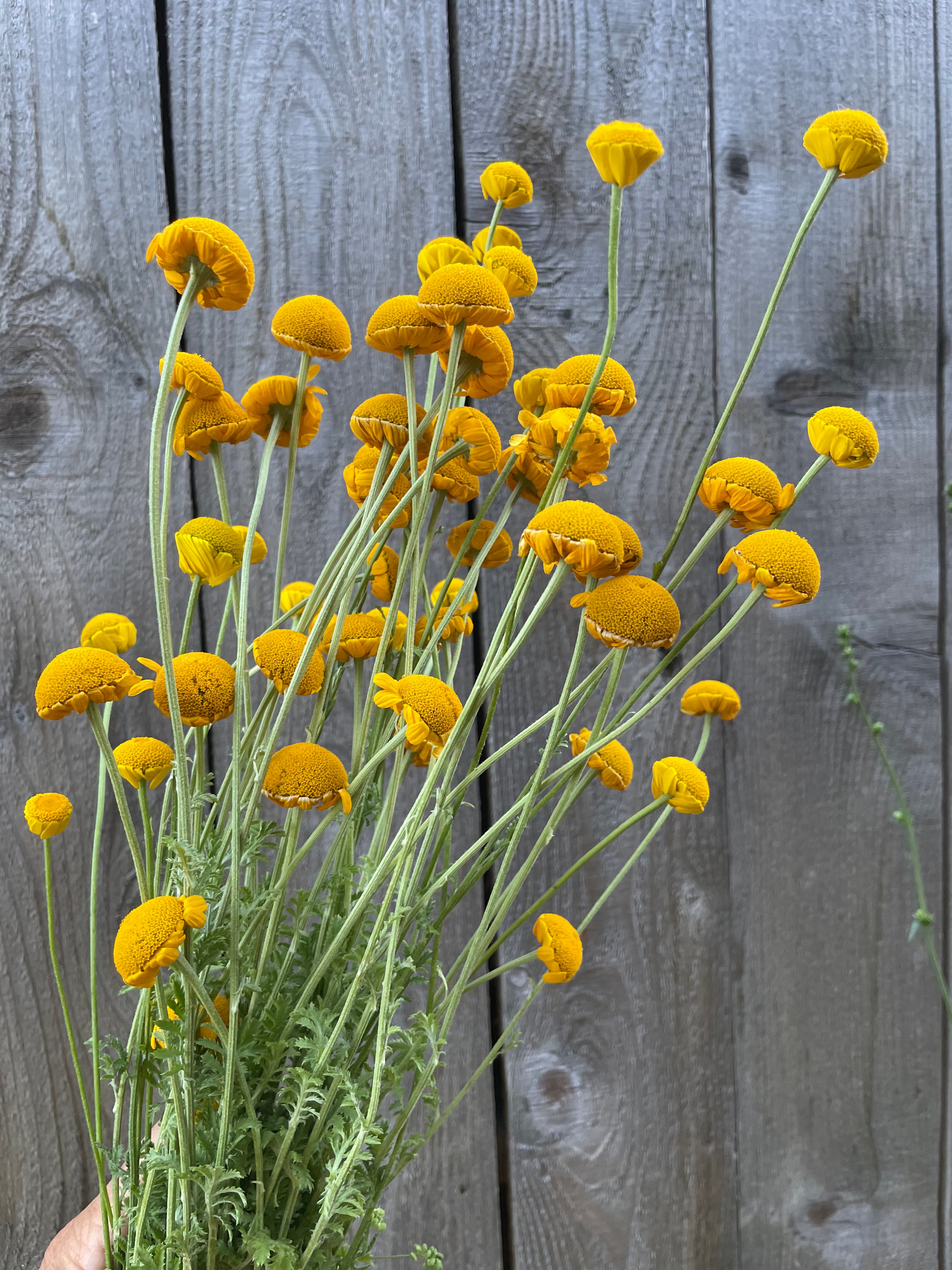
I was not, in fact, expecting to dye.
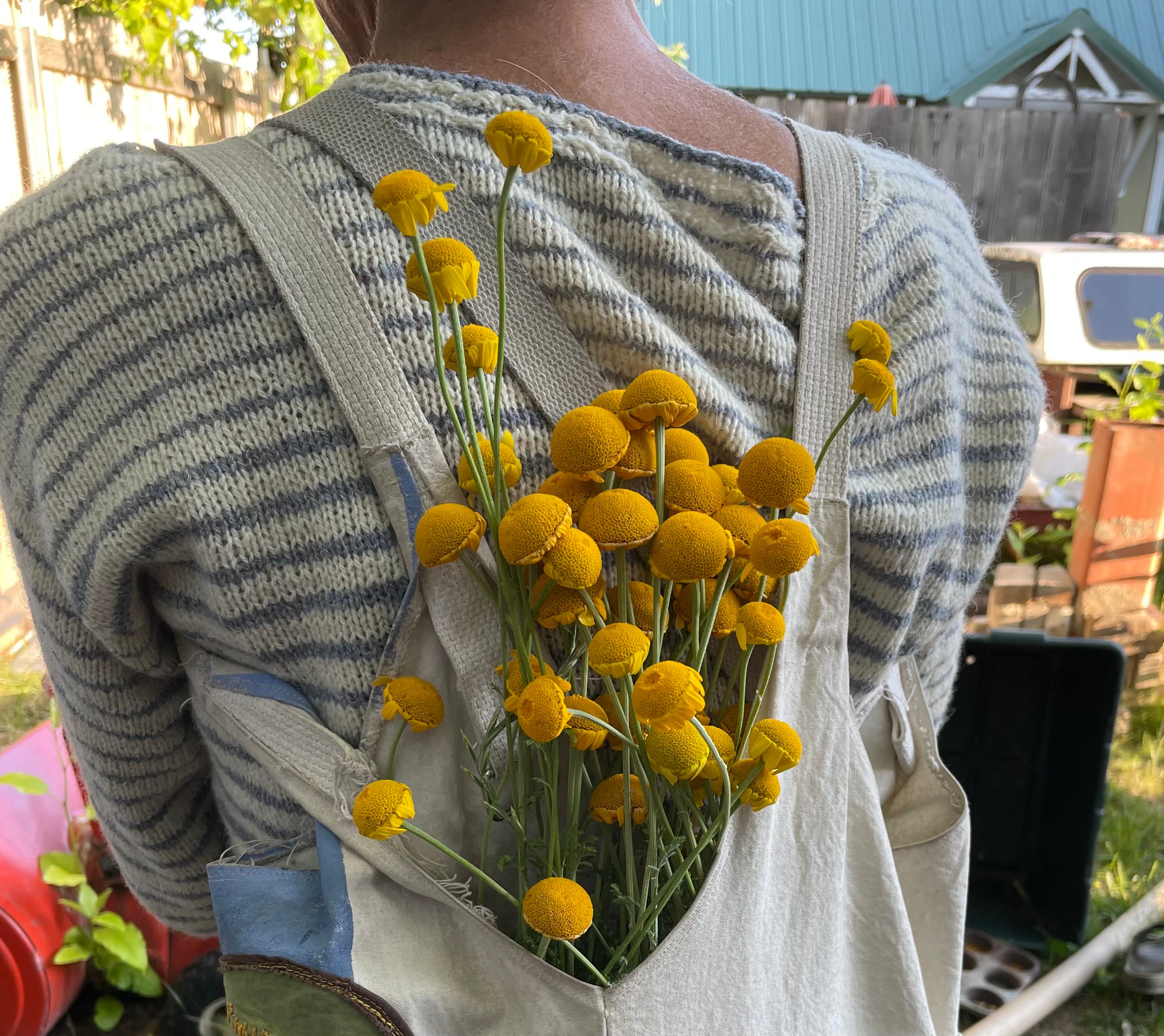
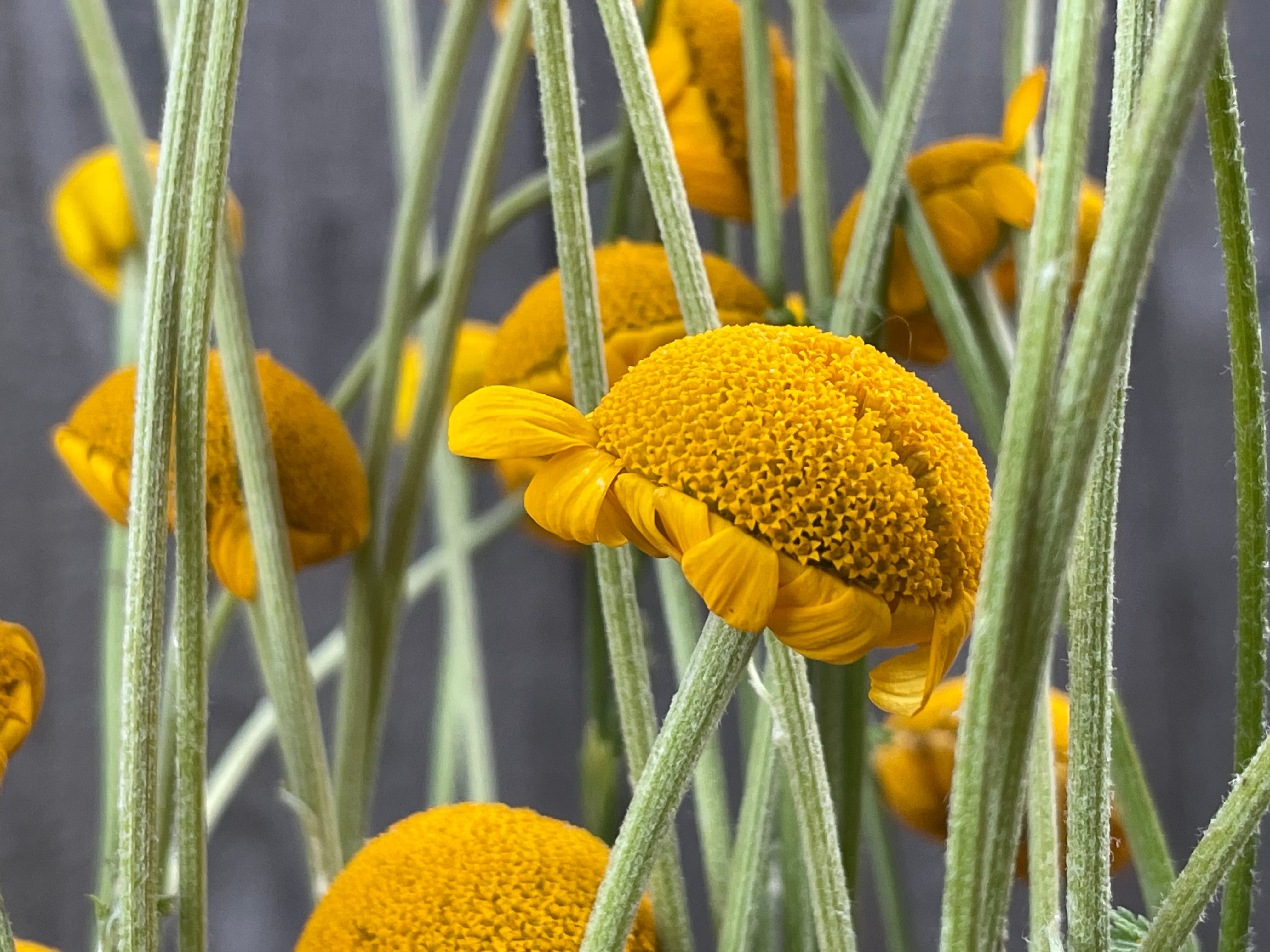
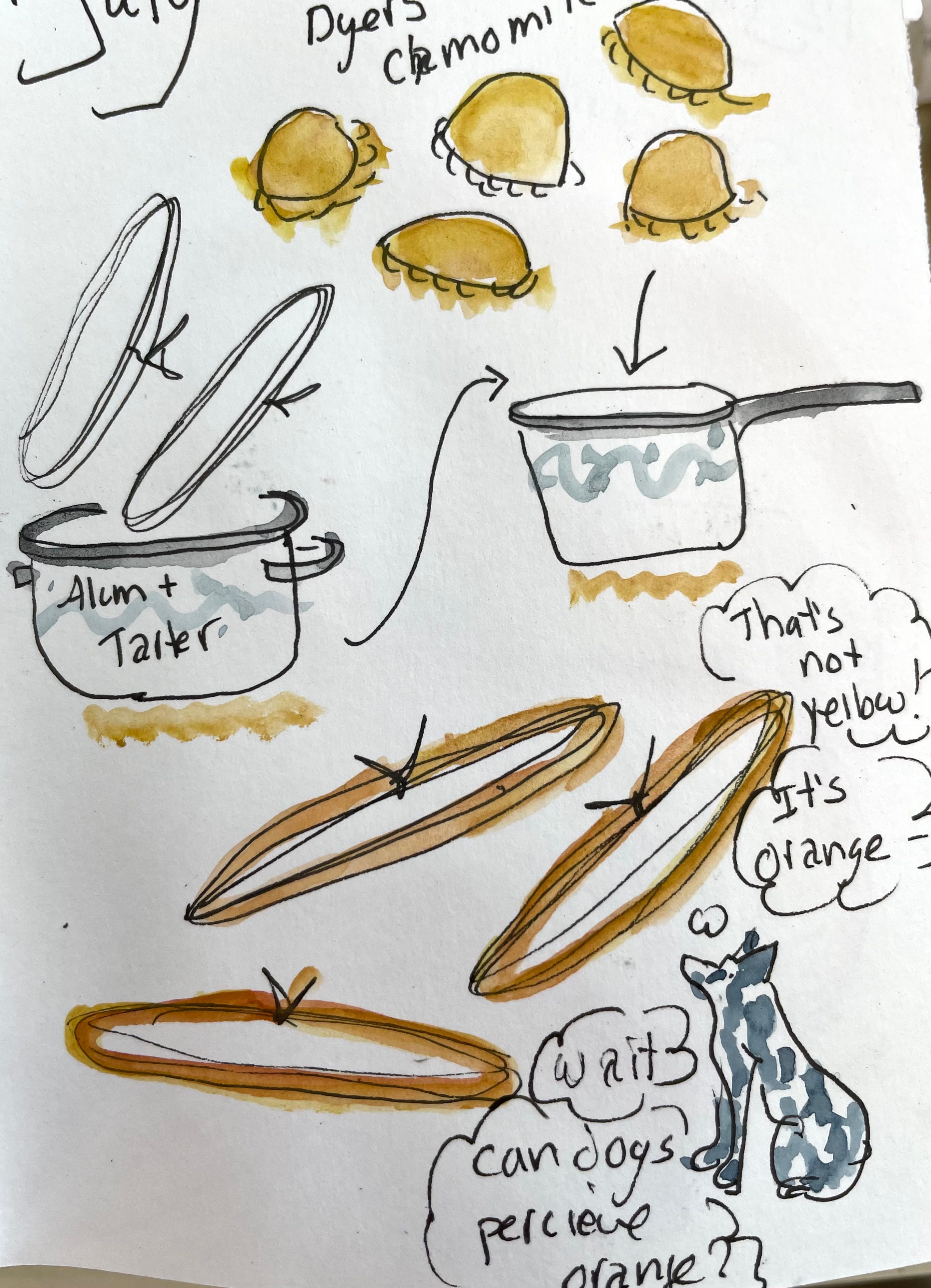
But when my daughter-in-law Ana handed me a bouquet of Dyer’s Chamomile from her garden1—
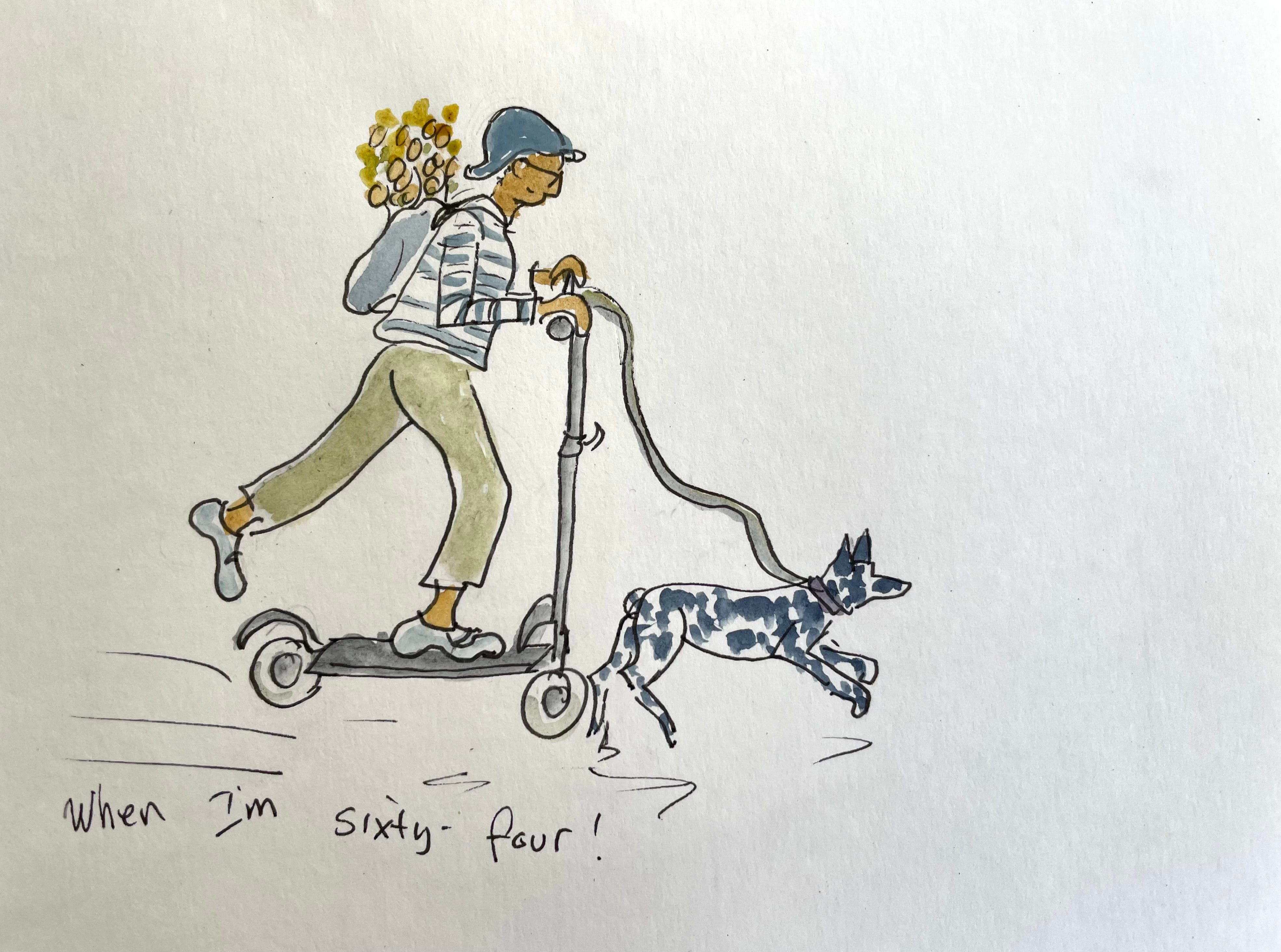
—how not to zip home and dive in?2
Except—did I even remember how?
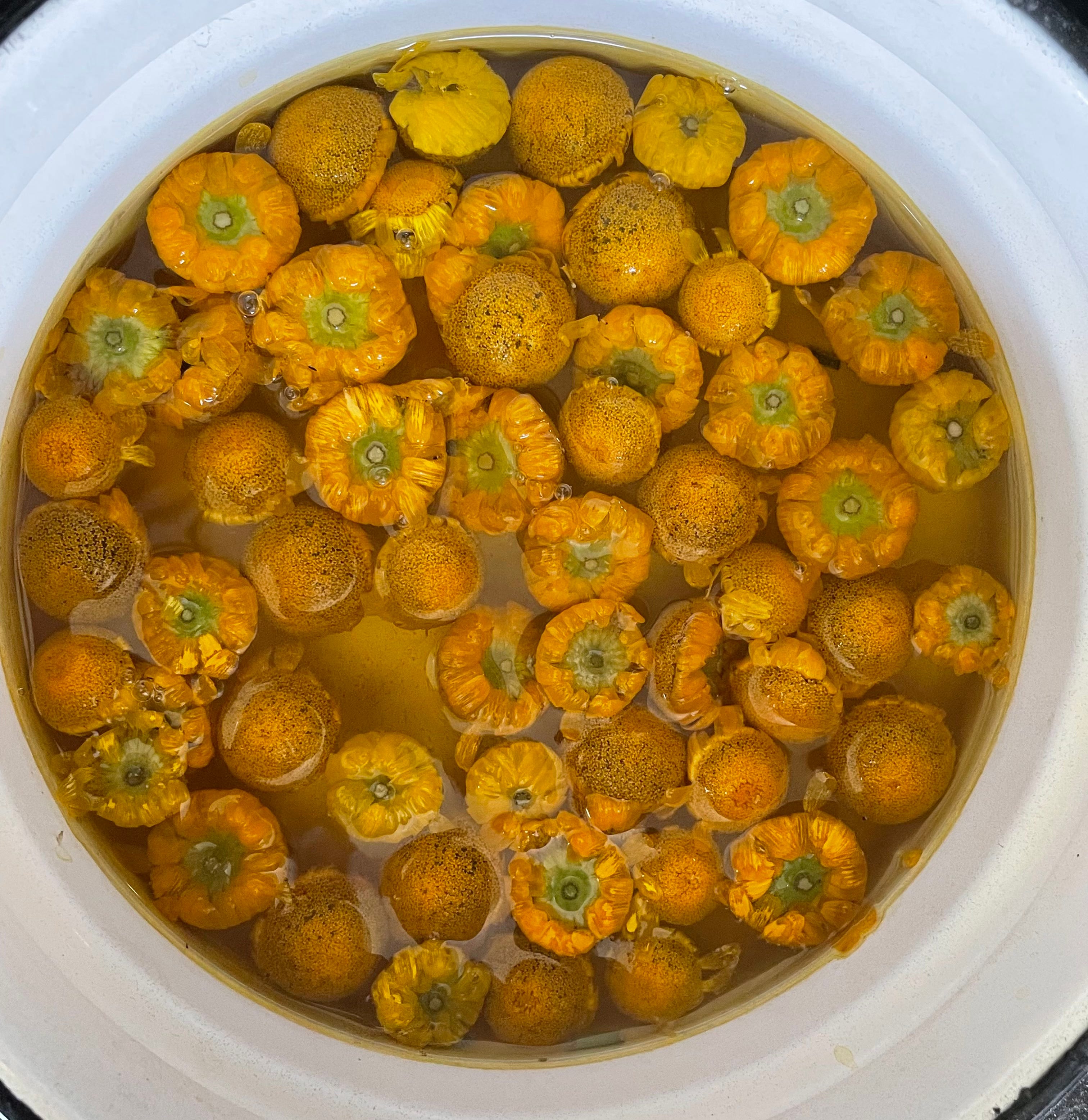
Yes, once upon a time I experimented with dyestuffs.


Any plant I could find and any technique I could read about was worth a try in those pre-internet days—or at least worth thinking about.
But it has been decades since I was just a gal having fun with backyard chemistry.3
And in truth I didn’t actually experiment for all that long because in the course of one summer—
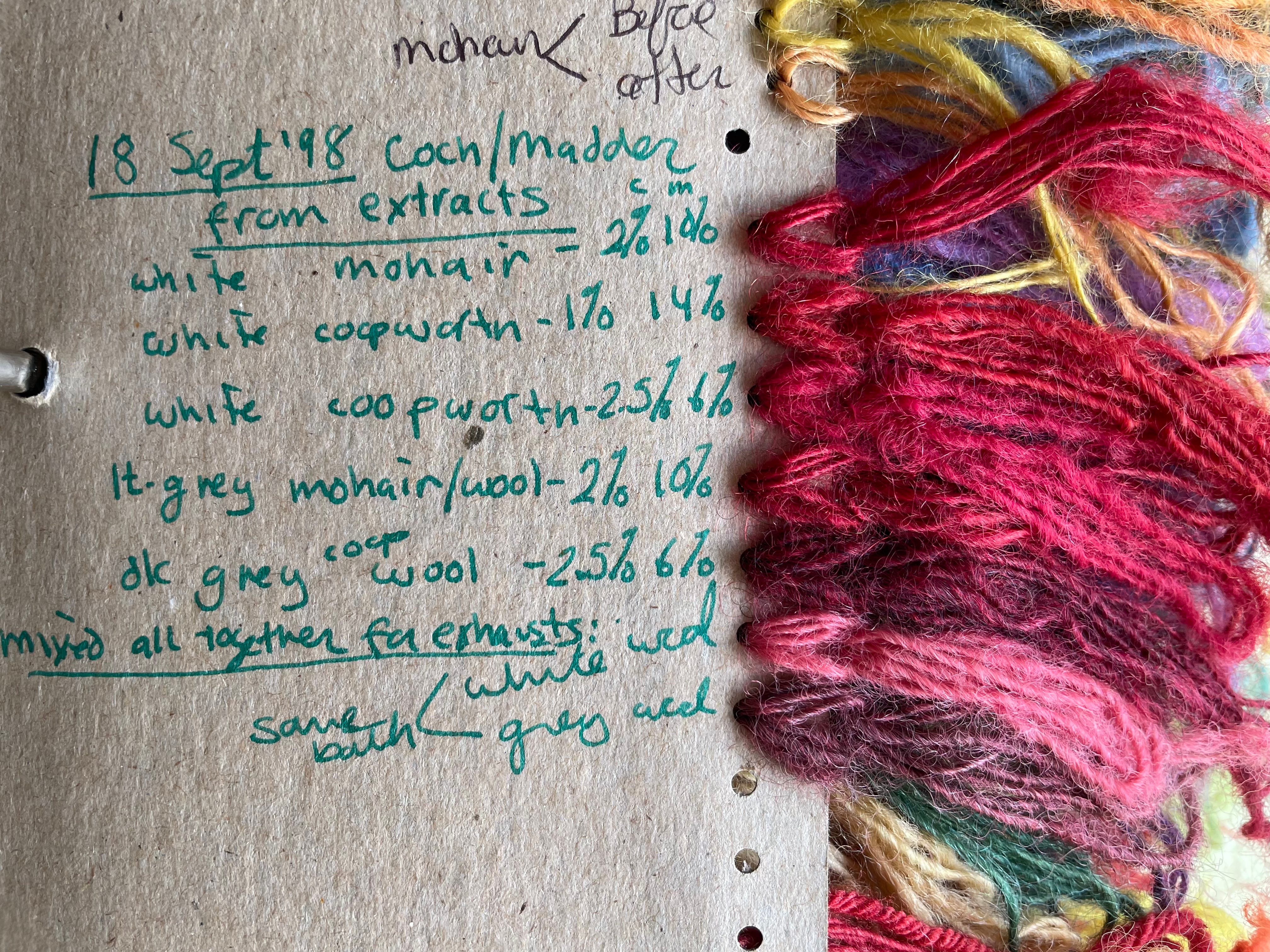
—the plant-centric play coalesced into commitment, and I gave myself over to formulas, notes, precise procedures, and the five most light-fast dyes I could access: indigo, cochineal, madder, weld, and black walnut. 4
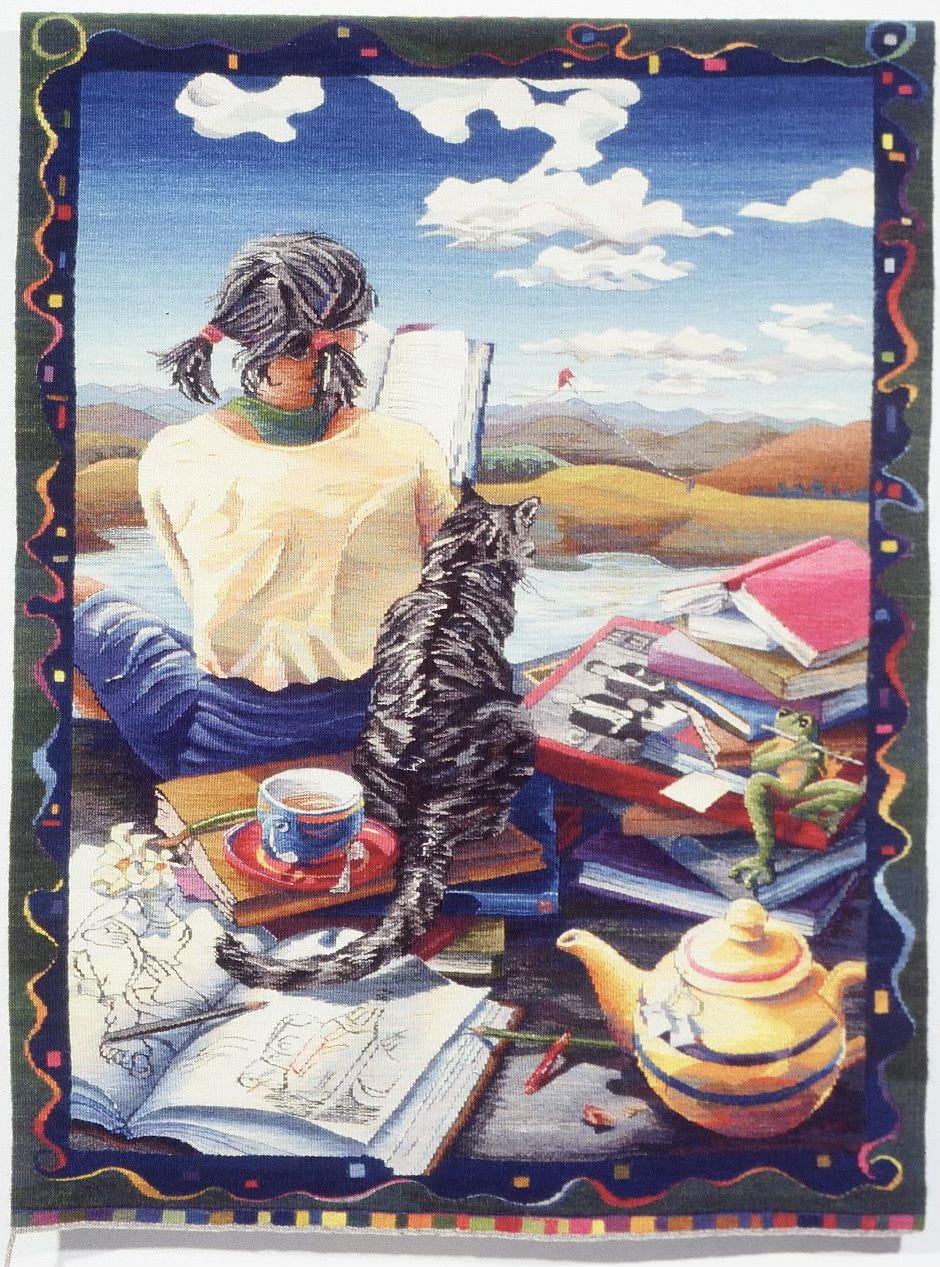
How not? The works I was making by then were big, time consuming, precious and expensive—and if I was going to make them with naturally dyed wool it was essential that the colors remain as stable as possible. No way was I going to mess around with potentially fugitive dye material.5
So experiments went out the window.


Random dye experiments anyway. There has never been a shortage of other kinds.
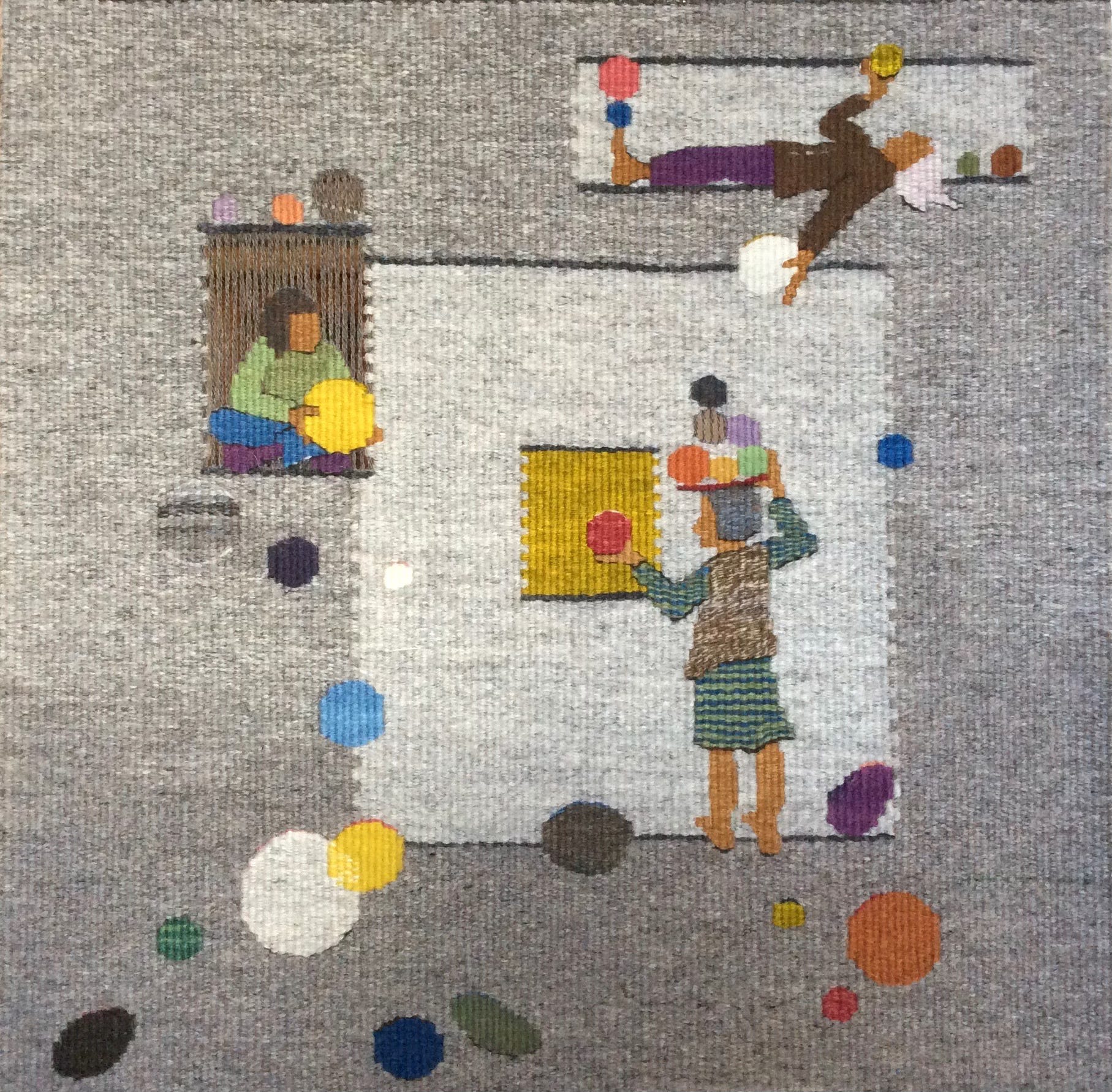
Indeed almost every time I settle into a routine with one aspect this yarnish life —
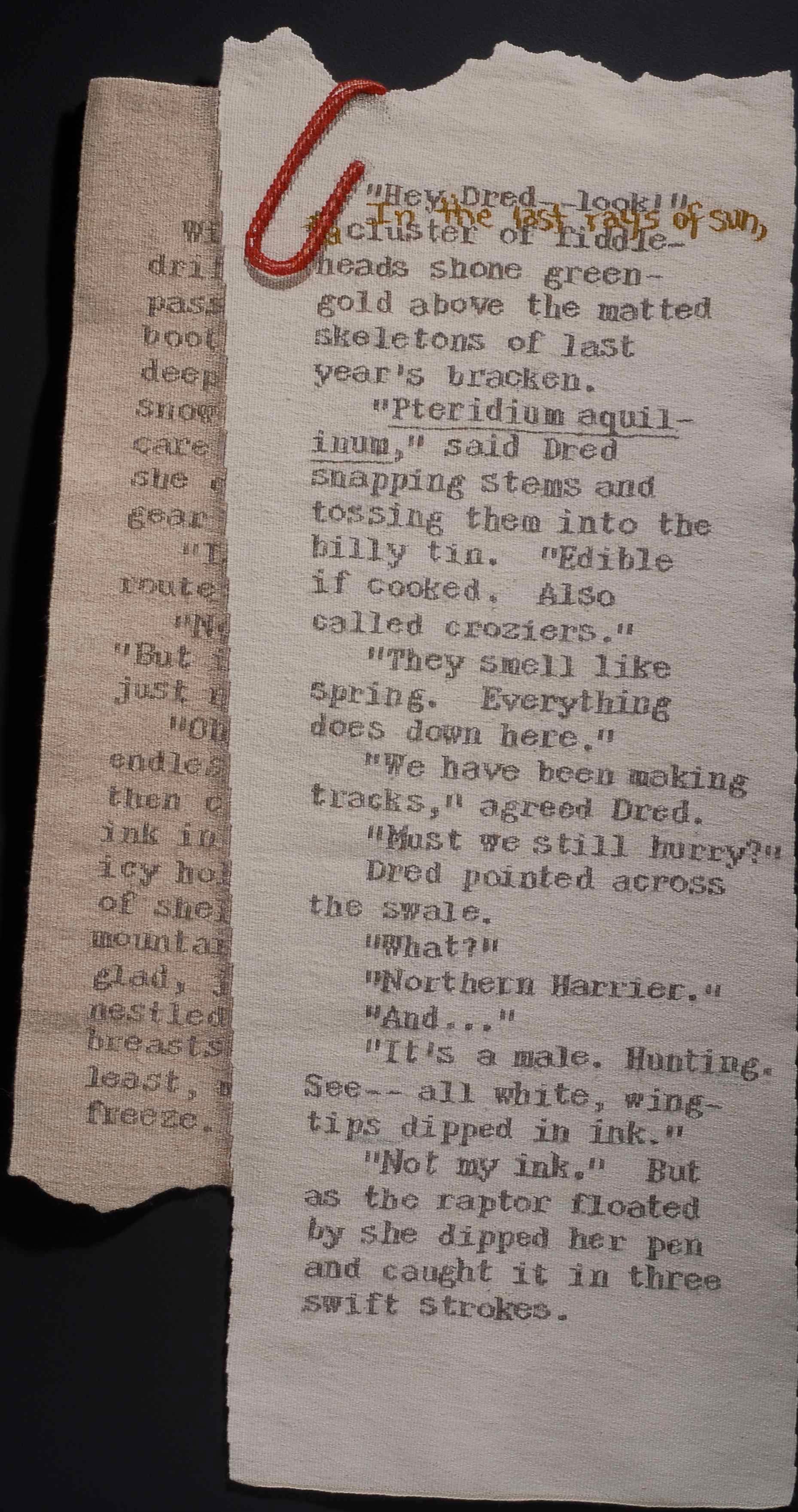
—a new question shows up in another.
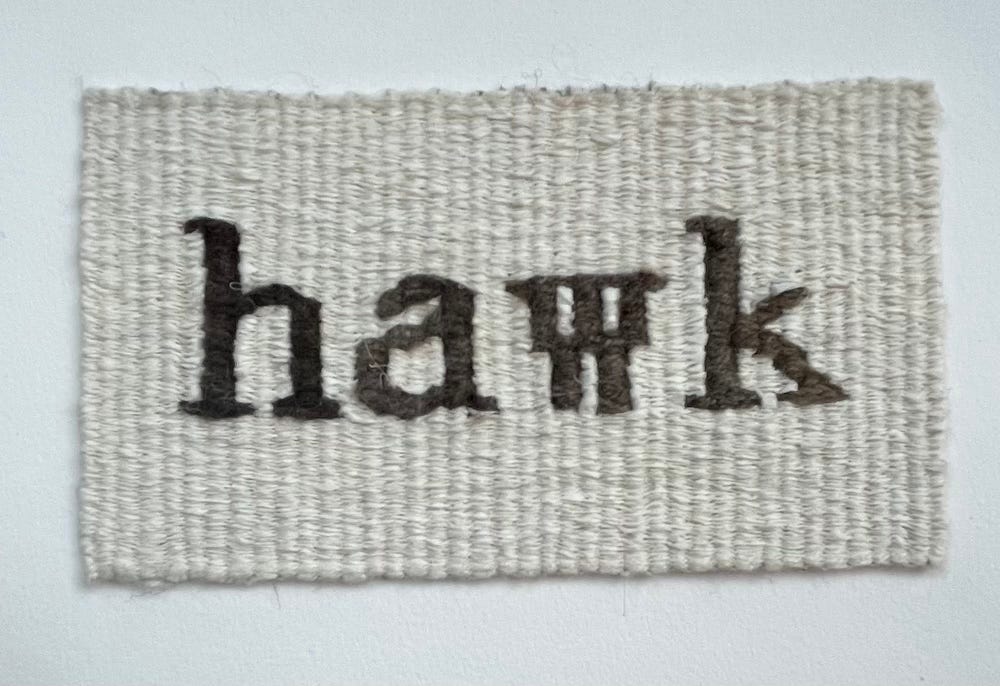
Or an old question resurfaces to be queried and explored afresh.
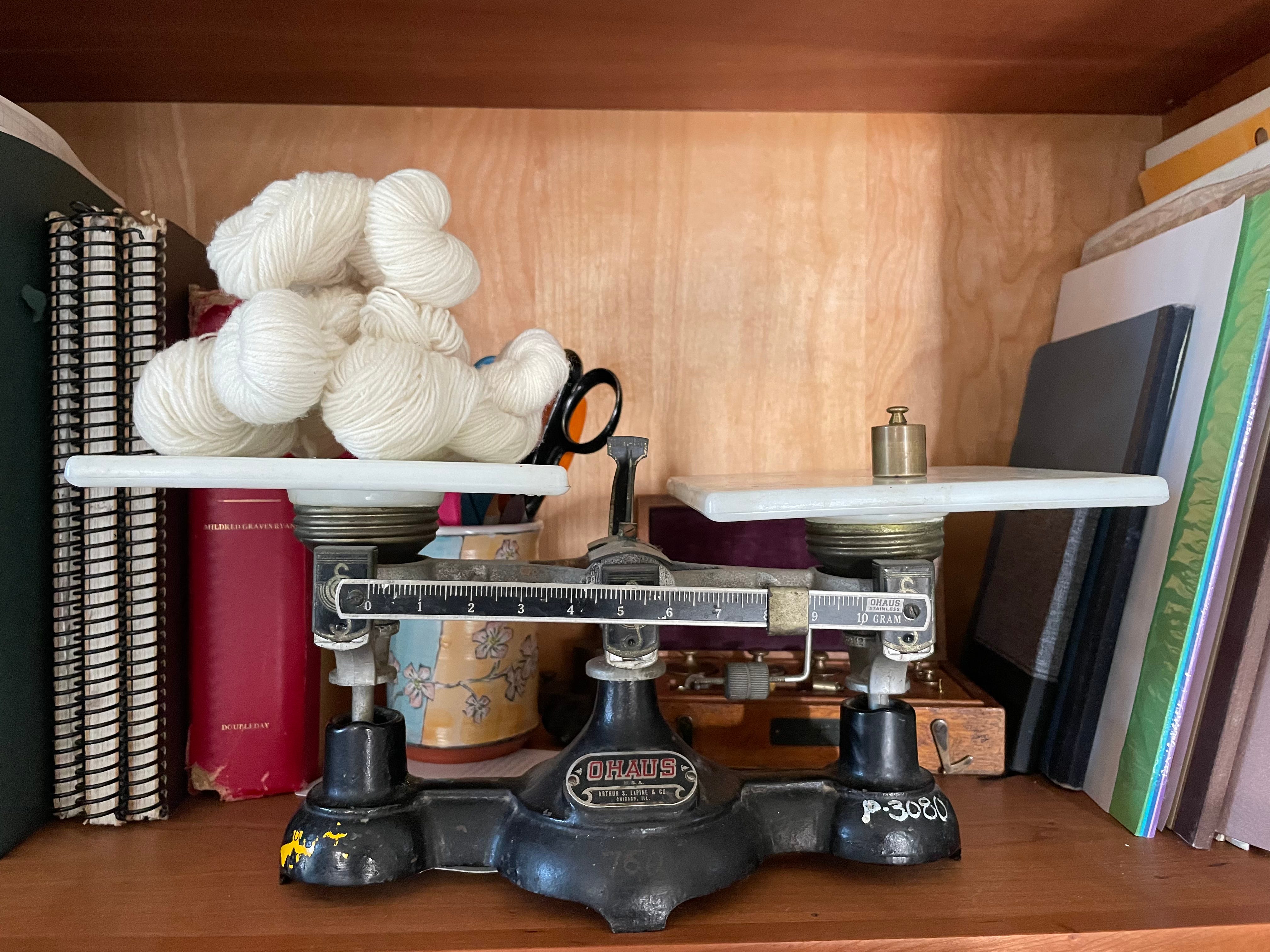
And off I go again.
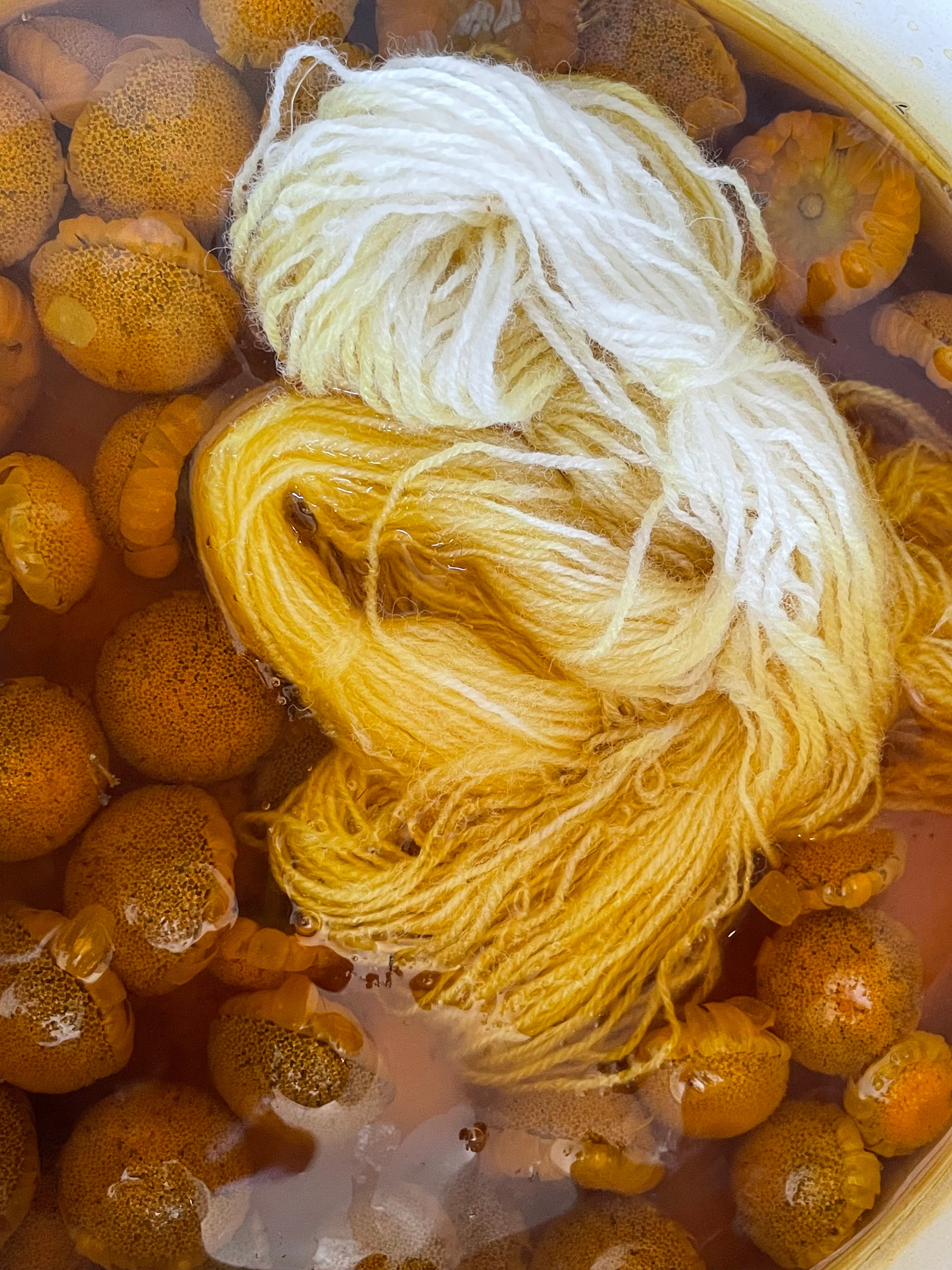
Happily, this means there are always things to notice—
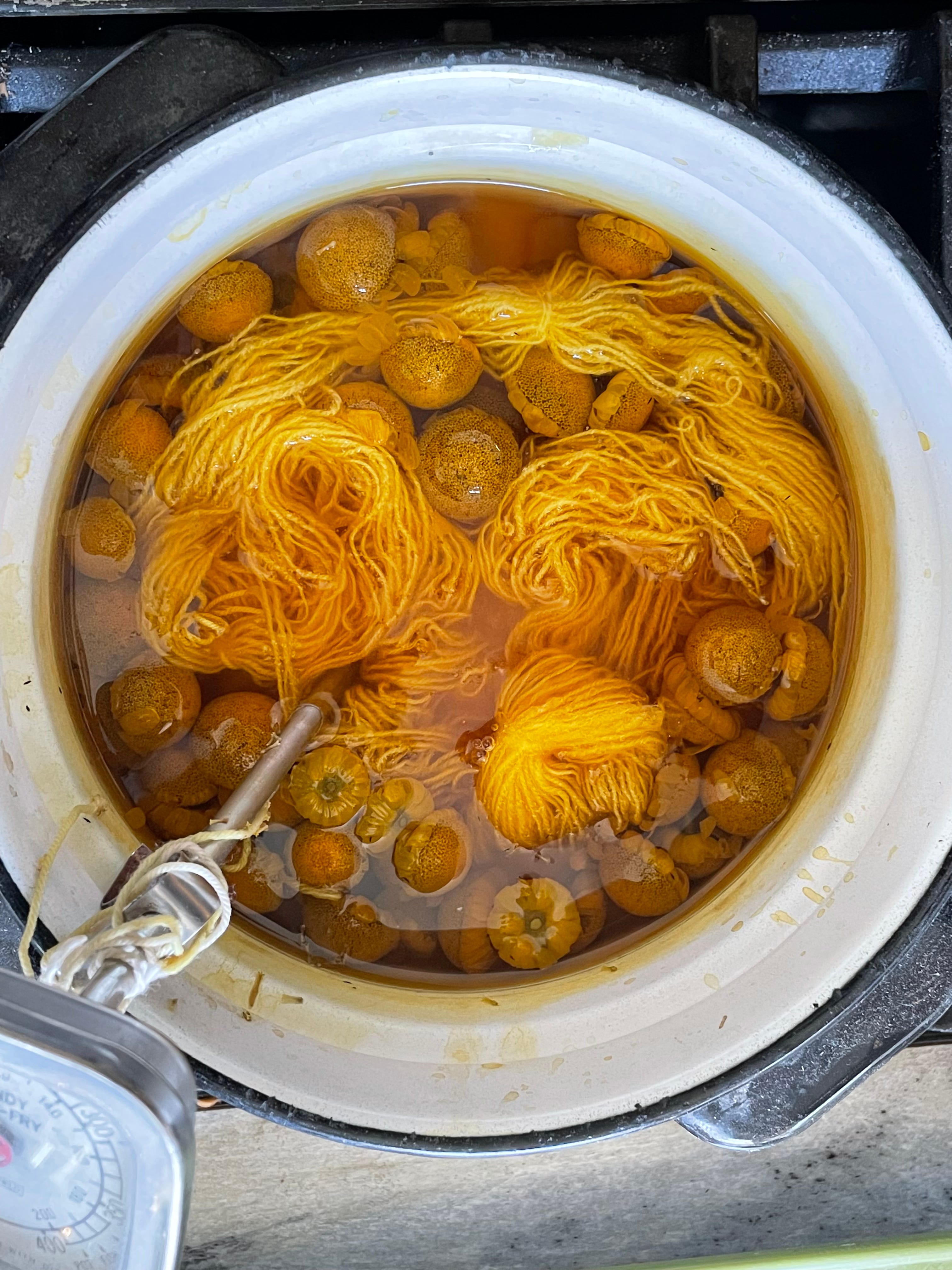
—things to learn about—
—and things to be surprised by.6
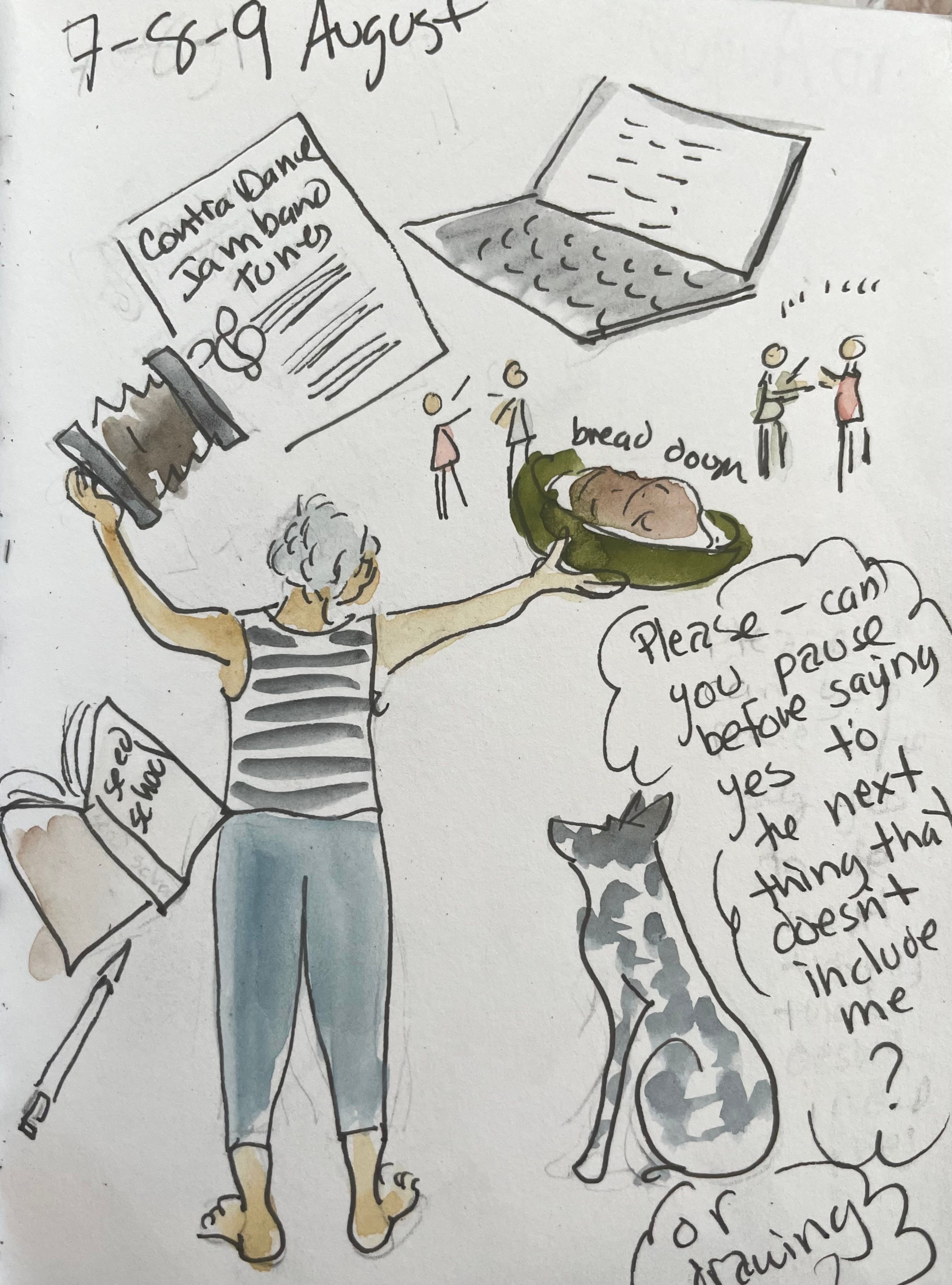
Less happily—well sometimes it’s all a bit much.
Still, if that’s simply the way it is, then a scoot across town with a bag of flowers and a head full of questions that may or may not get answered is not the anomaly my brain wants to make it (in other words a problem I can fix or should change)—
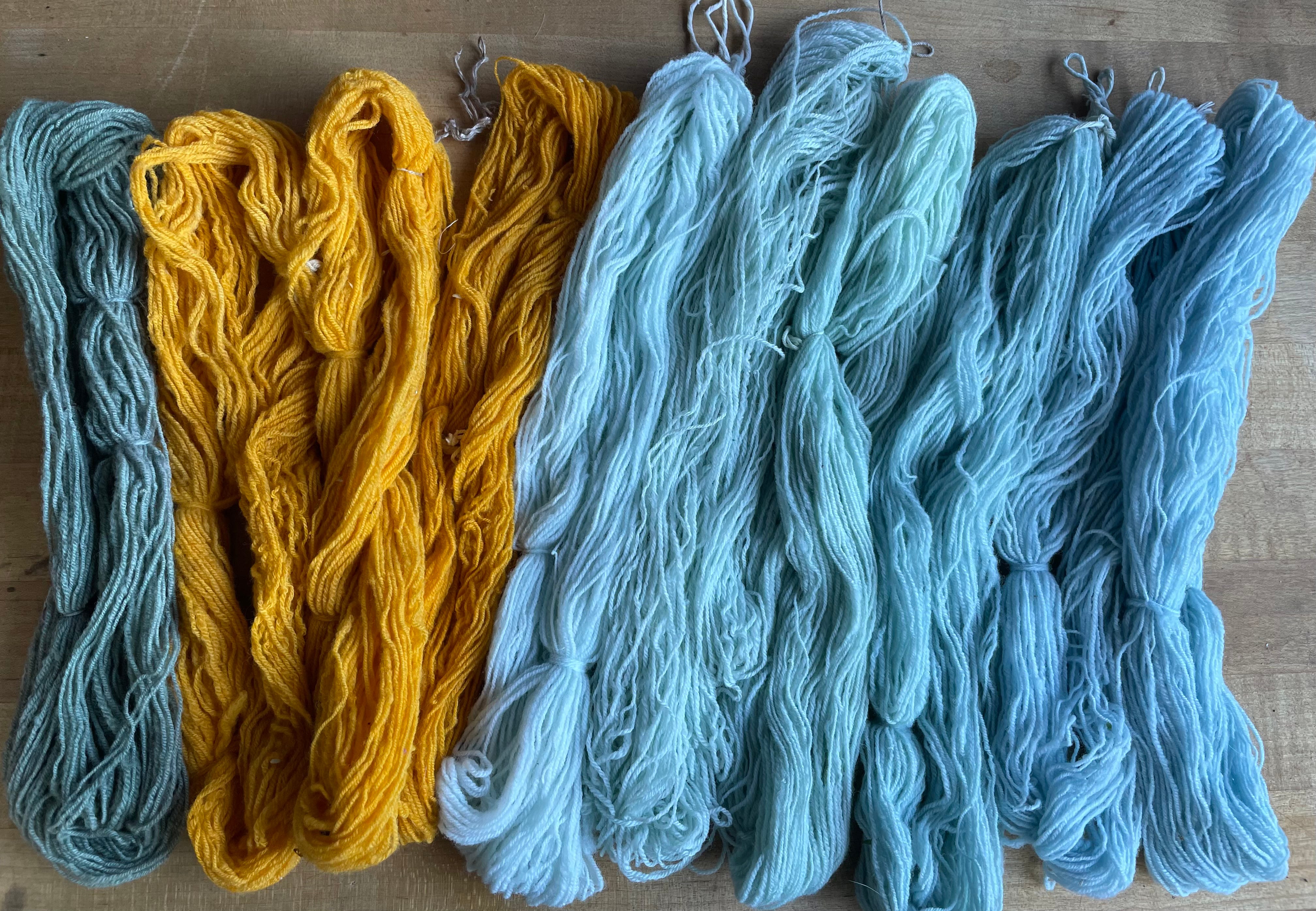
—but merely consistently-inconsistent-amazing-old-life-as-usual.7
And what’s not to love about that?
It certainly keeps me on my toes.
Dyer’s Chamomile (Cota tinctoria); seed from Grand Prismatic Seed. Highly recommend. Check out their website—if only to look at the gorgeous colors, and dream.
I won this razor scooter in a raffle at the Veterinarian’s office and used it to scoot to and from school with my son and our two dogs. I adored swooping around town, especially downhill, and I fear I got a teensy bit reckless (after all it was the turn of the century and I was only in my early forties). Until one day I zipped into my driveway, hit a bigger-than-usual pebble and did a face plant right in front of our house. And that, as they say, was that. Until now. Because somehow this cute little scooter made the cut in the great basement-emptying project that preceded moving house—and off I go again, dog and all.
And in case you think I’m a little nuts I will say that I don’t go fast, don’t do hills (there aren’t any between my son’s house and mine), and scooting is faster than walking, easier on my joints, and less fraught than a biking with Beryl when she is trotting beside me.
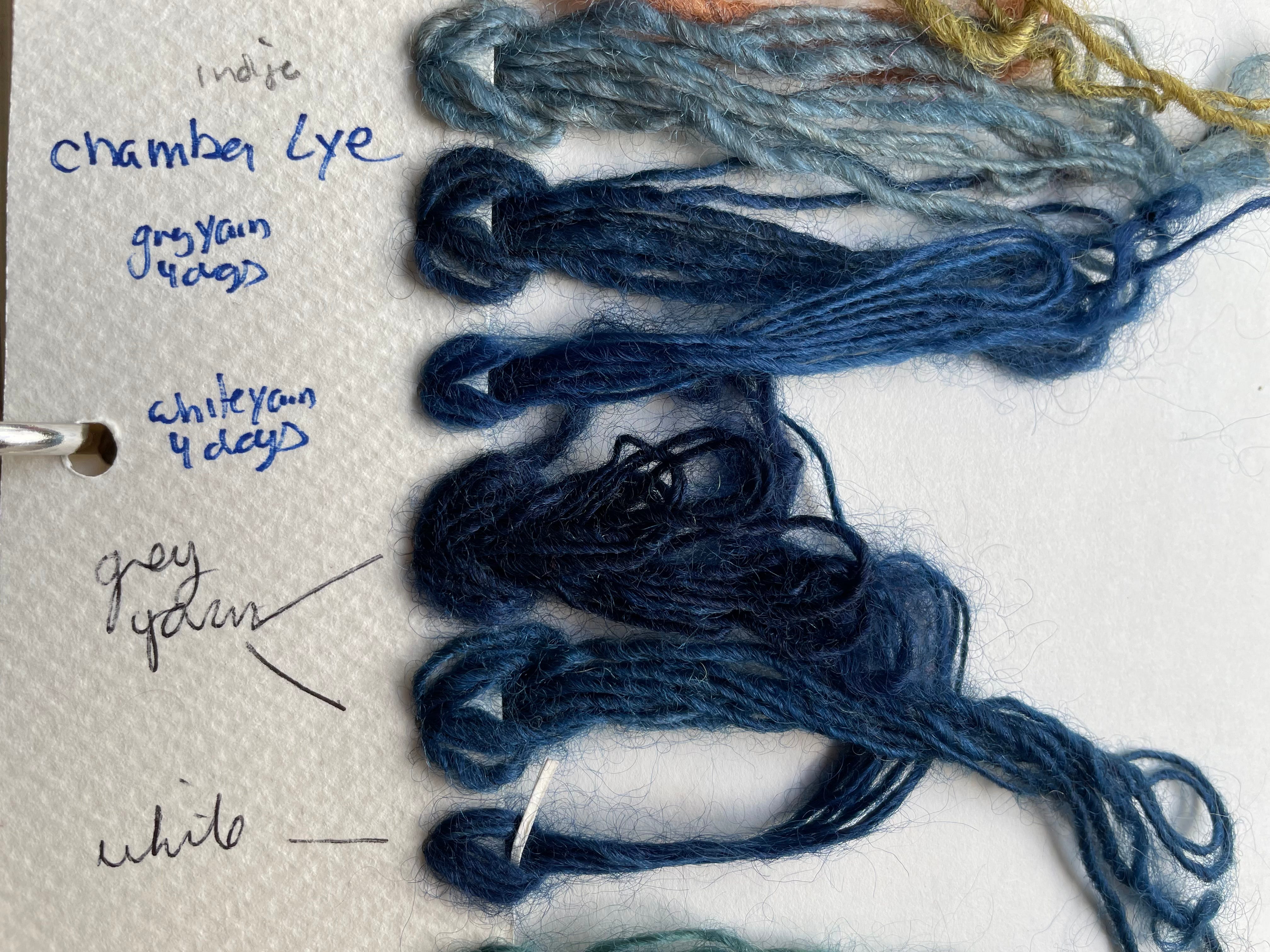
An inconvenient bathroom remodel (no toilet for a time), made it easy to collect pee in a bucket for Chamber Lye Indigo, and though this technique never became central to my yarn-dyeing life, the few vats I tried produced some of the richest and most lustrous blues I’ve ever had the pleasure of working with. The yarn was incredibly silky too—with no lingering odor. Can’t say the same for the dyepot in process though. I wrote an article about it called “The Boiling Pisspot of Science” for the Turkey Red Journal; a nod to Bill Nye the Science Guy for the title
I planted whatever dye plant seeds came my way—though I did pull out all the woad the moment I realized it is considered a noxious weed in my state. (Even if it was not actually a problem in my region, I didn’t want to start one). Indeed, it’s always worth checking such things before ordering or sowing the seeds.
Rita Buchanan’s A Weaver’s Garden and Trudy Van Stralen’s Indigo, Madder and Marigold were life-changing resources back then—instrumental in my natural dye explorations and among the very few books that made the cut when I drastically thinned my library this winter.
Already working with and committed to Lanaset (synthetic acid dyes), into which I’d invested massive effort and $$ , the shift was sparked by a single tapestry guided by two new parameters: 1. I’d weave in all the ends as I went, and 2. I’d use only natural dyes for the yarn. I’ve done both ever since.
The synthetic acid wool dyes are excellent, but I was overwhelmed by the number of base colors and never really felt comfortable with the breadth of choice. This red, or that? Or maybe that other. And how many blues are there to choose between? And yellows? Oh dear. Indeed all else aside, I cannot describe the relief of committing to a seriously limited palette. It has freed me in so many ways. There are still endless possibilities since I’m a spinner and the fleece of one breed of sheep will take dye differently than the fleece of another. There are also a million shades of natural grey and brown to overdye so I’ve never felt even remotely hampered. And almost no matter what, the colors will work together.
The freedom of limitation and the creative possibilities of constraints probably warrants an entire post of its own, as I think it’s a huge and important topic. One could certainly say I was constrained by trying to be here every Tuesday (vs whenever the spirit moved me), and yet I think I feel more free in the writing because, well, if you don’t like this week’s version, if it’s a little extra wordy (or not wordy enough), or there are not enough comics of Beryl—there’s always the next one!
This also meant buying dyes (and dye extracts), that often came from other parts of the world—a thing I don’t love but which has been important as I’ve never had the wherewithal to grow all I use. And it’s not like my climate is cochineal friendly :-)
Also—stable is as stable does; I mean everything changes over time—and thank goodness for that! Indeed, I have always loved making things that are ultimately compostable—see it as a positive benefit. But when all you hear around you is that if your material are not archival they’re not worth using—well, it’s hard not to be influenced. Until, of course, you find you absolutely do not care (so much more relaxing)
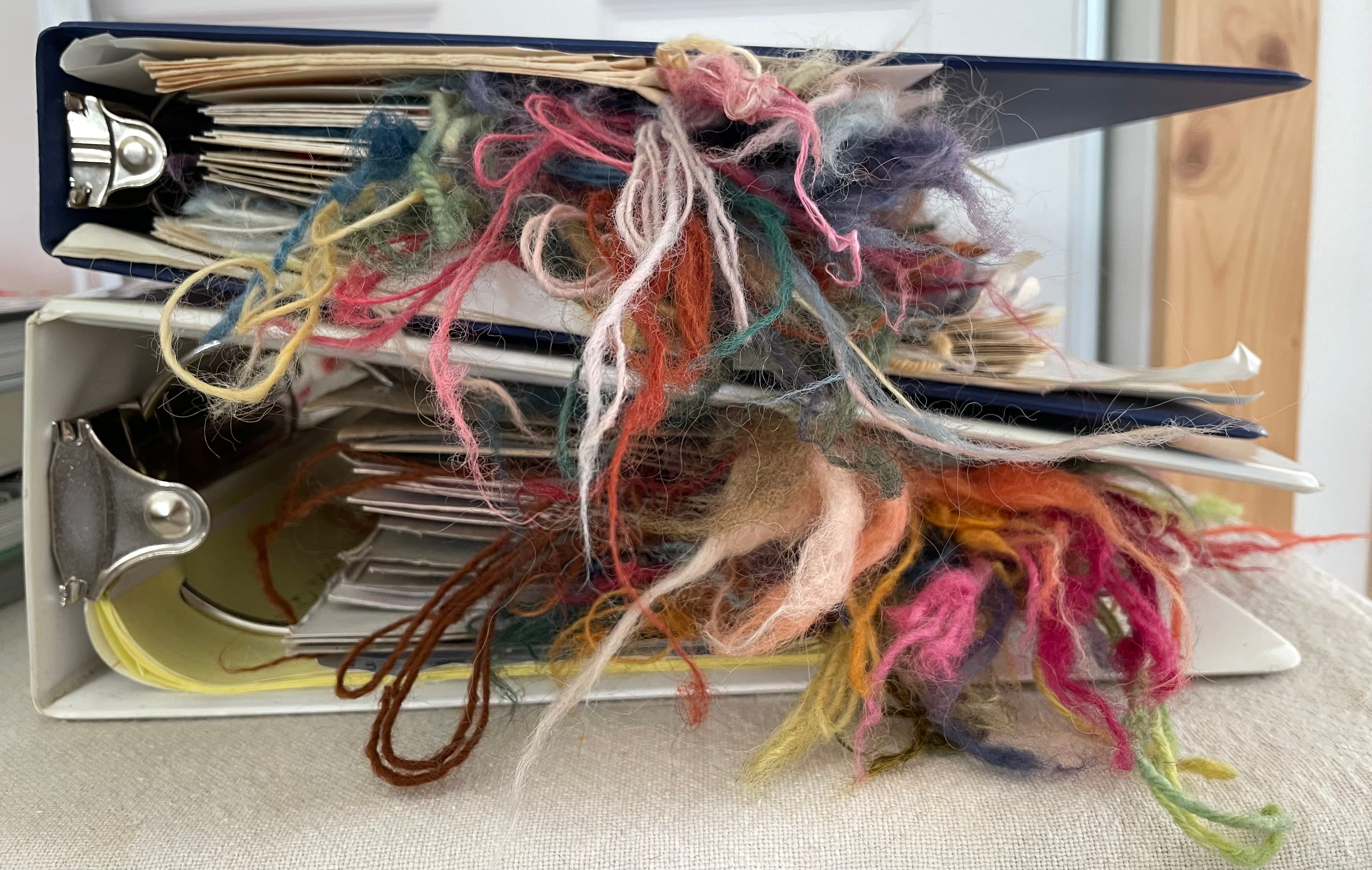
Funny how I forget this—and only in looking at my archive do I see evidence of all the whacky experiments—many of which came and went like dreams and a few of which led to long term shifts in my work.
Of course as we established last week, any time I think I’m committing to something new and load up on supplies and tools my attention goes elsewhere, so a “long term shift” might just be a general shift to more yarnish inconsistency—a thing I wrote about for Ply Magazine’s Consistency Issue a few years ago. You can see the first pages of the article on my old blog.
dye info:
Mordant: Alum (aluminum potassium sulfate)/tarter pre-mordant at approx 12%/ 6% .\. And yes, I keep track of temperature.
Other things? I added some baking soda to the dye bath for no reason other than that knowing a weld dyebath brightens considerably when slightly alkaline, I wondered if Dyer’s Chamomile would have the same response. It seemed to made a difference, but casual dyer that I now apparently am, I didn’t do the proper experiment and leave half baking soda free—socannot know know for sure.
And once again — yowza! so much stuff packed in here. Really. Next time I’ll try to reign it in…
Never rein in your writing or your creativity. As always I’ve loved today’s post and so much inspiration. Thank you
Love the yellows!